FROM ELIGIBLE TO READY
Retirement Planning for Federal Employees
 Federal retirement is not one number, one date or one benefit. It is a system: your FERS pension, TSP, Social Security, health insurance, life insurance, survivor choices and the timing of your final paycheck all affect one another.
The goal is not simply to discover the first day you are allowed to retire. It is to understand what income will begin, what benefits will continue, where gaps may appear and whether the plan still works when your assumptions change.
Start with the retirement question you need to answer first.
Retirement eligibility is the beginning of the analysis
Age and service determine which retirement paths may be available, but two employees who can retire on the same date can face very different outcomes. An immediate, postponed or deferred annuity can change when income starts, whether reductions apply and how federal health coverage fits into the transition.
Before choosing a date, confirm your minimum retirement age, creditable service and the retirement category you expect to use. Then ask the question that matters more: what benefits and cash flow come with that choice? Use current OPM guidance or your agency benefits office to verify the rules that apply to your record before acting.
Build retirement income in layers
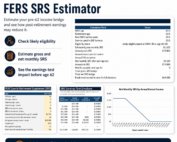
Your FERS pension can provide a dependable foundation, but it is rarely the entire plan. TSP withdrawals, Social Security, a possible FERS Special Retirement Supplement, spouse income, other pensions and taxable savings may all need to work together.
Look at both the amount and the start date of each income source. The plan should show which dollars cover essential expenses, which accounts provide flexibility and what changes when temporary income ends or Social Security begins. A retirement that works at 62 may look very different from the same plan at 57.
PLANNING PRINCIPLE
“Eligible” answers whether a retirement path may be available. “Ready” asks whether income, healthcare, taxes and family protection still work after the paycheck stops.
Protect the benefits that matter after you leave
Retirement decisions can affect more than the pension. FEHB continuation, FEGLI elections, survivor benefits and beneficiary designations can shape both your monthly income and your family’s long-term security. These choices deserve attention before the retirement package is submitted, not after.
Review coverage history and eligibility rules early enough to correct records or ask questions. If a spouse depends on your federal health coverage or retirement income, include that person in the decision. A larger monthly annuity today may come with less protection later, while stronger survivor protection may reduce current income. The tradeoff should be understood in household terms.
Plan the bridge from payroll to pension
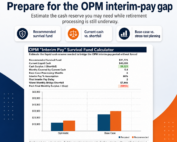
Your last day of work does not necessarily lead directly to a full, finalized annuity payment. Your agency must prepare the retirement package, OPM must review it, and interim payments may be lower than the final amount while adjudication is underway.
Treat that period as an expected transition, not an emergency you hope to avoid. Estimate essential expenses, identify which income will be available immediately and build a cash reserve for the gap. The same exercise should account for leave payouts, TSP withdrawal timing and any delay before another benefit begins.
Test more than one version of retirement
A single projection can create false confidence. Compare an earlier date with a later date. Test lower investment growth, higher healthcare costs or a longer OPM processing period. Consider what happens if part-time earnings reduce a temporary benefit or if one spouse dies first.
Scenario planning is not about predicting the future perfectly. It is about discovering which assumptions carry the most weight while you still have time to adjust contributions, expenses, retirement timing or cash reserves.
Before settling on a retirement date, you should be able to answer these questions:
- Which retirement category am I using, and when would the annuity begin?
- What are my estimated FERS pension and other income sources before deductions and taxes?
- How will FEHB, FEGLI and survivor elections change at retirement?
- What covers expenses while OPM processes the application?
- What income changes at age 62, at Social Security claiming and at Medicare eligibility?
- Which assumption would force me to change the plan if it went wrong?
Put the pieces of federal retirement into one connected plan.
Start with the workbook that answers the broad question, then add a focused tool only when a specific decision needs more detail.
BUILD THE FOUNDATION ONCE. USE IT FOR EVERY DECISION.
Clear money basics make federal benefits easier to use.
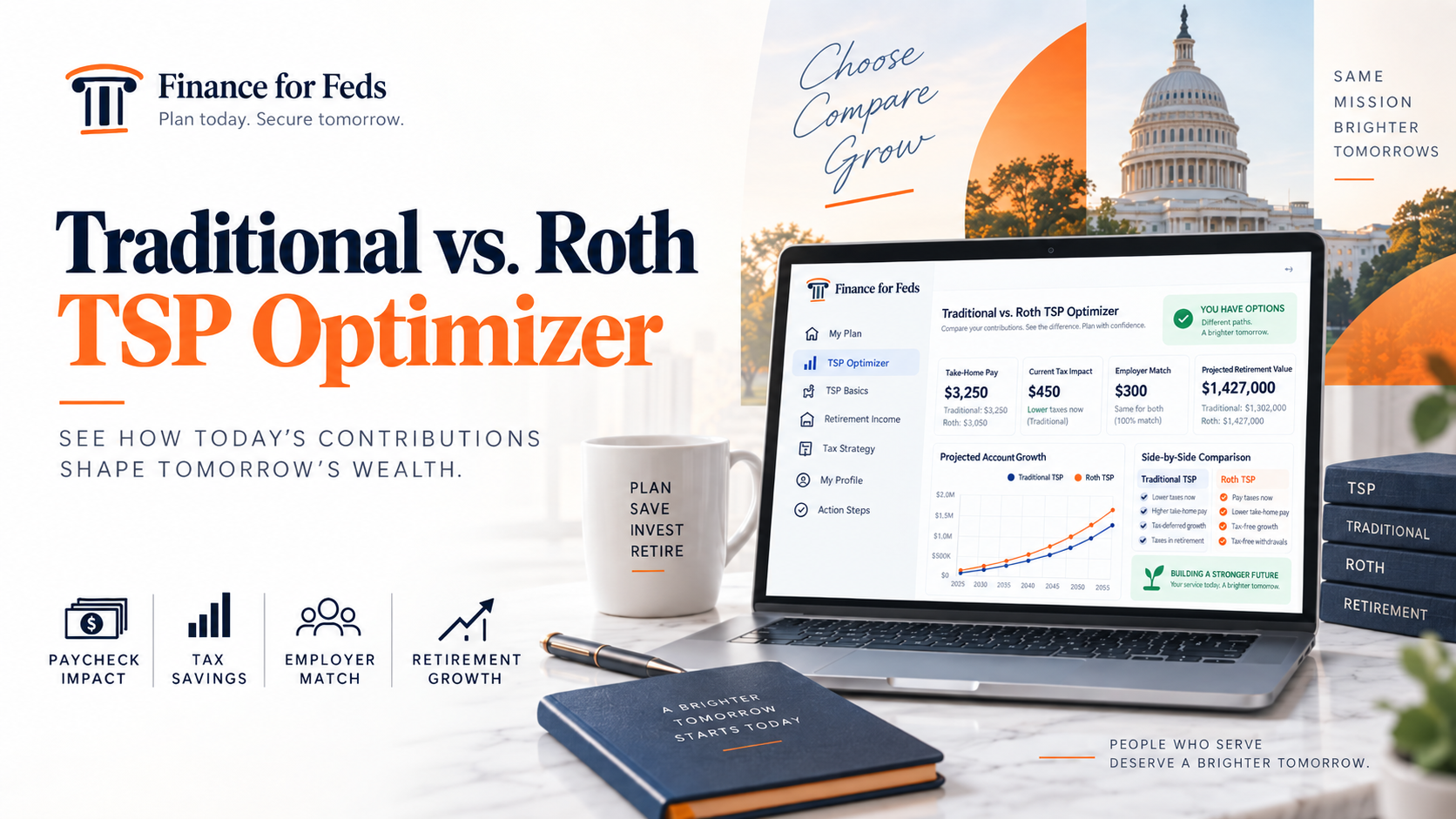
Planning for retirement as a federal employee involves more than estimating a pension or checking a TSP balance. Your retirement decision may depend on FERS eligibility, Social Security timing, TSP strategy, sick leave credit, military buyback value, interim pay planning, expenses, and long-term income needs. These retirement tools are designed to help you organize those moving pieces, test different scenarios, and make more confident decisions before you separate from federal service.
Retirement Articles









A RETIREMENT DATE SHOULD COME WITH A PLAN
See the tradeoffs before your final paycheck.
Federal retirement becomes easier to evaluate when eligibility, income, benefits and the transition period are considered together. Start with the question creating the most uncertainty, test it with your own assumptions and verify critical benefit rules before making an election.