
FEDVIP and FSAFEDS: Are These Benefits Worth It for Your Household?
The Forgotten Stepchildren of Open Season
When Federal Benefits Open Season rolls around every autumn, the Federal Employees Health Benefits (FEHB) program steals all the spotlight. That makes sense—health insurance is expensive, complicated, and capable of producing a plan brochure thick enough to serve as a doorstop.
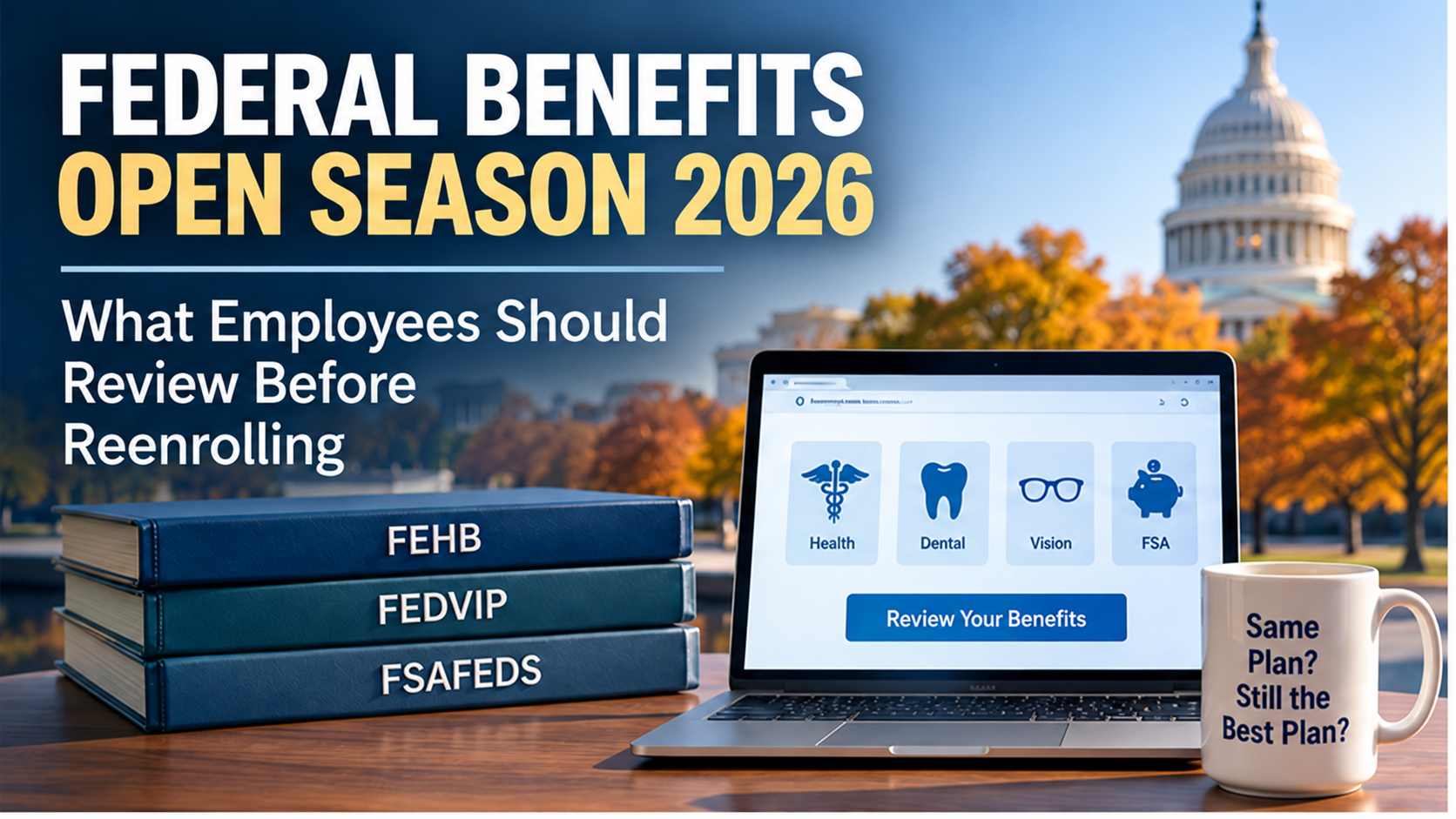
Because FEHB gets all the glory, FEDVIP dental and vision plans and FSAFEDS flexible spending accounts tend to get treated like an afterthought. The dollar amounts are smaller, so people skim through the options, click “auto-renew,” and move on.
That is a missed opportunity. If your household is expecting braces, new eyeglasses, daycare invoices, or a string of predictable medical copays, ignoring these programs is basically leaving free money on the federal table. You just need to know how the puzzle pieces fit together.
FEDVIP: Insurance, Not a Mandate
The Federal Employees Dental and Vision Insurance Program (FEDVIP) is completely separate from FEHB. You don’t even need to be enrolled in an FEHB health plan to buy a FEDVIP dental or vision policy.
Because FEDVIP premiums come 100% out of your pocket with no government subsidy, the decision is dead simple: Will the benefits you actually use exceed what you pay in premiums?
There is no universal “yes” here. Insurance should solve a real financial problem; availability is not the same thing as necessity.
The Great Dental Calculation
Suppose Mark and his spouse have pristine teeth, their kids are grown, and their dental needs consist of two routine cleanings a year. For them, buying a top-tier, high-premium dental plan is essentially donating money to an insurance company.
Now imagine Sarah, whose teenager just received a grim prognosis from the orthodontist involving three years of metal brackets. That changes the math instantly. When shopping for FEDVIP dental plans, ignore the sleek brochure photos and look at:
-
Orthodontic coverage limits and waiting periods
-
The coinsurance percentage for major services (like crowns and root canals)
-
Annual maximum payout caps
-
In-network provider lists (because finding out your family dentist is an “out-of-network luxury experience” after the fact is a painful lesson)
Vision Coverage: Predictable and Optional
Vision coverage is even easier to evaluate because most households already know who wears glasses. If two adults and two kids need annual exams, frames, and contact lens supplies, compare the total annual premium to the plan’s frame allowances and exam copays. If everyone in your home has 20/20 vision and nobody wears contacts, you can safely skip vision coverage entirely.
The Retirement Perk You Didn’t Know About: Unlike FEHB, which strictly demands five continuous years of coverage prior to retirement, FEDVIP is surprisingly friendly. If you retire on an immediate annuity, you can carry your FEDVIP coverage straight into retirement without meeting a five-year rule—or even enroll in FEDVIP for the first time as a retiree during a future Open Season. (Of course, your overall retirement timeline still hinges on whether you take an immediate pension or separate early under a Deferred vs. Postponed FERS Retirement).
FSAFEDS: The Tax-Advantaged Cheat Code
While FEDVIP is traditional insurance, FSAFEDS is a pre-tax spending trick. It allows eligible federal employees to pay for predictable out-of-pocket expenses using pre-tax dollars—bypassing federal income, state income, and FICA taxes.
You aren’t creating new expenses to save money on taxes; you are simply taking a tax discount on money you were already forced to spend anyway.
1. The Health Care FSA (HCFSA)
A Health Care FSA covers out-of-pocket medical, dental, and vision expenses that your insurance doesn’t pay in full—think copays, deductibles, prescription refills, and even over-the-counter medical items.
For 2026, the contribution limit is $3,400, with a carryover limit of up to $680 into the following year.
2. The Limited Expense FSA (LEX HCFSA)
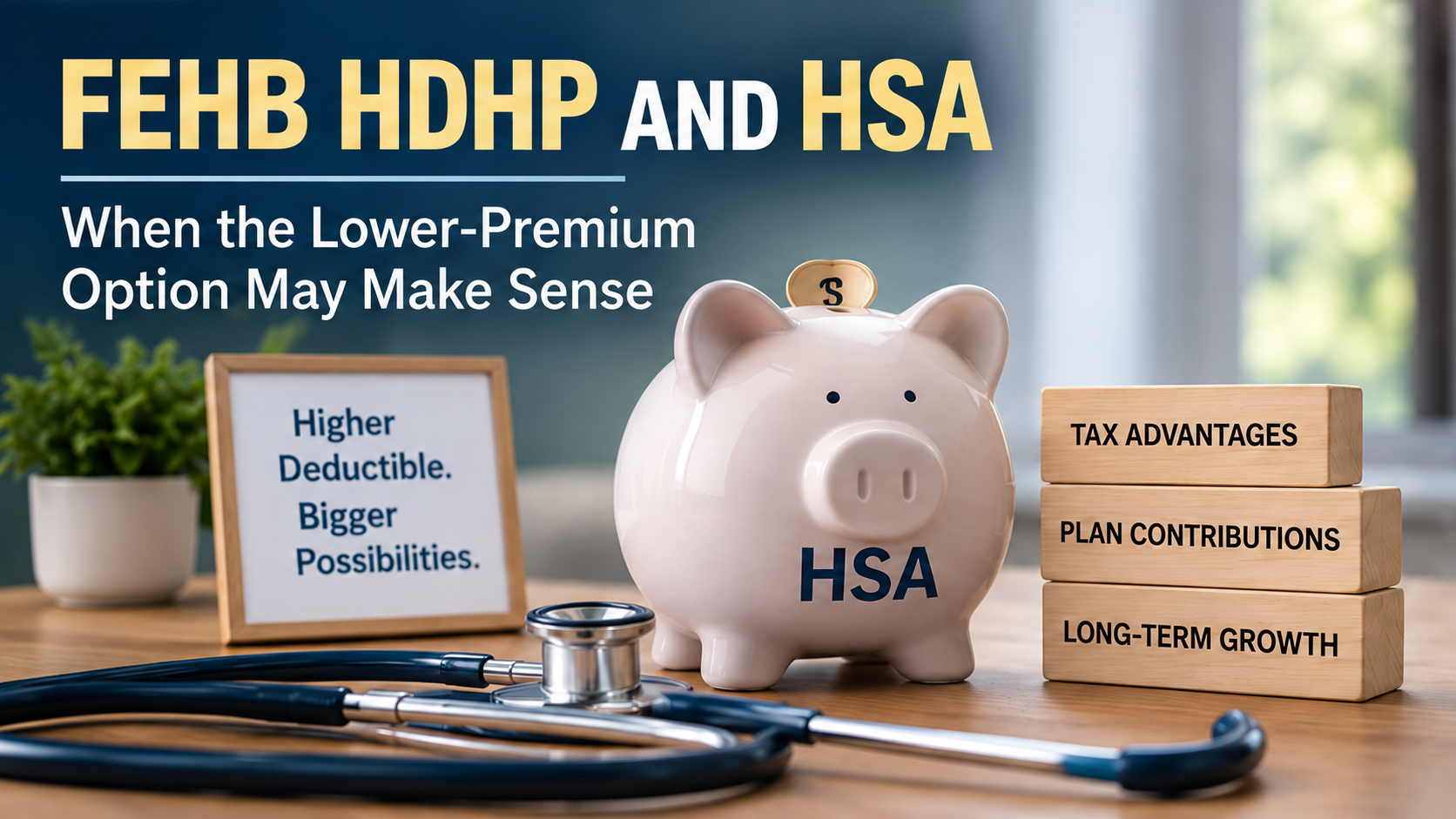
If you are enrolled in an FEHB High-Deductible Health Plan paired with a Health Savings Account (HSA), IRS rules prevent you from having a standard Health Care FSA.
Enter the Limited Expense FSA. This account restricts your pre-tax spending exclusively to dental and vision care. This creates an incredible system: use your LEX HCFSA dollars for predictable cleanings, glasses, and braces, leaving your HSA funds untouched so they can sit in index funds and grow tax-free for retirement. (Check out our FEHB HDHP and HSA Guide to see how this system works in detail).
3. The Dependent Care FSA (DCFSA)
If you pay for daycare, preschool, before/after school care, or summer day camps so you and your spouse can work, the Dependent Care FSA is a massive tax shelter.
For 2026, the household limit is $7,500 (or $3,750 if married filing separately). For a household already spending $12,000 a year on childcare, putting $7,500 of that through a pre-tax account can save you a couple thousand dollars in taxes. It won’t make daycare cheap—we have to operate within the laws of physics—but it certainly softens the blow.
How FEDVIP and FSAFEDS Work Together
To see how these programs coordinate, look at how Sarah handles her teenager’s upcoming $5,000 orthodontic bill:
-
Insurance Step (FEDVIP): Sarah picks a FEDVIP dental plan with solid orthodontic coverage that pays 50% up to a $2,000 lifetime cap. That drops her out-of-pocket balance to $3,000.
-
Tax Step (FSAFEDS): Sarah elects $3,000 in her Health Care FSA. Instead of paying that remaining $3,000 out of her checking account with fully taxed dollars, she pays it with pre-tax income, saving roughly $700–$900 in taxes depending on her bracket.
FEDVIP shrinks the base bill; FSAFEDS shrinks the tax hit on what’s left over. That is how you win Open Season.
Don’t Overfund Your Account
The secret to winning with an FSA is brutal honesty about your upcoming calendar. Look at what you spent last year on dental work, vision, copays, and childcare, and build your numbers around expenses that actually exist today—the same practical approach behind learning How to Budget on a GS Salary Without Overcomplicating It.
Estimate conservatively based on real numbers. Tax savings are wonderful, but forfeiting unused funds because you over-funded your account and ran out of time to spend it is the definition of a pyrrhic victory.
Do not select a benefit just because Open Season produced a shiny button that says “Enroll.” Start with your household’s actual needs, run the math, and pick the tools that make your life cheaper and more predictable next year.
Related Tools
Share This Article
About the Author: Finance for Feds Editorial Team