Federal Benefits Open Season 2026: What Employees Should Review Before Reenrolling
Every autumn, right around the time the leaves start turning, Sarah’s inbox receives its annual avalanche of emails about Federal Benefits Open Season. Like millions of federal employees, she skims the subject lines, sees the familiar logo of her current health plan, and hits delete. Her plan worked fine this year. Her doctors accepted it, her prescriptions got filled, and nobody sent her a medical bill large enough to require sitting down first. Why complicate things?
That logic is entirely understandable, but keeping your plan because you actively reviewed it is very different from keeping it because comparing health plans sounds less appealing than scrubbing bathroom tile with a toothbrush. Open Season exists because health insurance is a moving target. Premiums jump, provider networks shrink, copays shift, and prescription formularies quietly reshuffle while you aren’t looking. A plan that fit your life perfectly three years ago might currently be costing you thousands of dollars in hidden friction.
The FSAFEDS Trap: No Auto-Rollovers Allowed
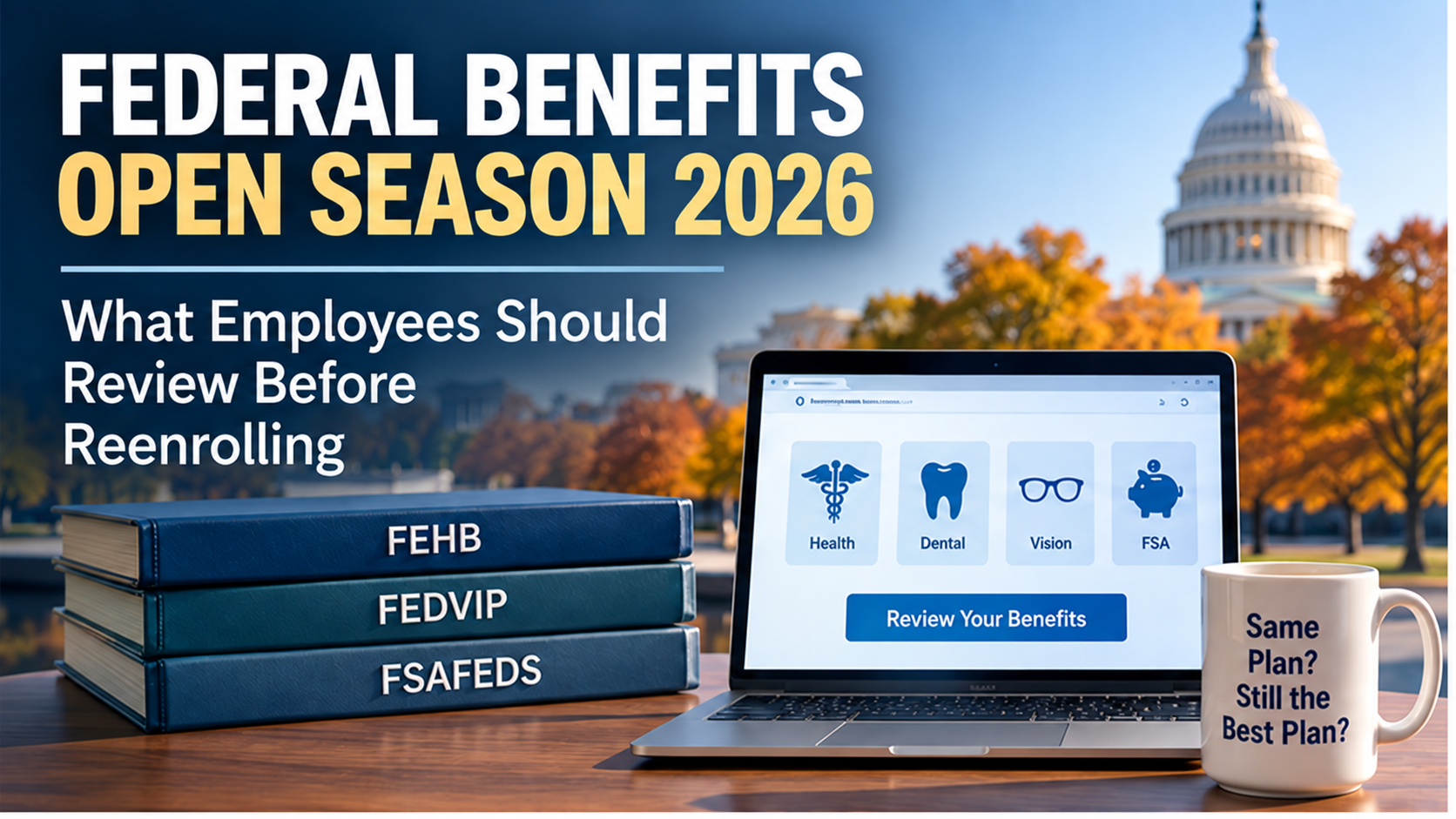
If you only pay attention to one thing when Open Season opens, make it your Flexible Spending Account. While your FEHB health insurance and FEDVIP dental or vision plans will conveniently roll over automatically if you ignore them, FSAFEDS is far less forgiving.
If you want a healthcare or dependent care FSA next year, you have to actively log in and re-enroll. There is no sympathetic “I thought it rolled over” clause waiting for you in January—OPM will simply withhold your tax savings, leaving you to pay for daycare or contact lenses with fully taxed dollars like an amateur.
Beyond the Premium: Reading the Fine Print
When reviewing your health plan options, the single biggest trap is staring exclusively at the biweekly premium. Yes, the math matters—a $20 biweekly increase quietly pulls $520 out of your paychecks over the year, and a $50 increase gobbles up $1,300. But saving $1,300 on premiums is a pretty hollow victory if your cheaper new plan slaps you with a $2,500 deductible and moves your daily cholesterol medication into a specialty tier that costs as much as a used jet ski.
You have to open the actual plan brochure. Reading a federal health insurance PDF ranks somewhere between filing taxes and watching paint dry, but buried deep in those pages lies the fine print about prior authorizations, hospital coinsurance, and tier changes that will actually dictate your bank balance next year.
Doctor Loyalty and Network Shenanigans
Another classic Open Season gamble is assuming your doctor has sworn a lifelong blood oath to stay in your plan’s network. Provider contracts expire, hospital systems break up with insurance companies, and medical groups drop coverage all the time. Before you smugly auto-renew, spend three minutes searching the provider directory for your primary care doctor, your specialists, and your local hospital.
The same rule applies to mental health coverage: a plan can brag all day about having a “vast nationwide network,” but that doesn’t help you much if the only three therapists within a fifty-mile radius who accept your insurance haven’t taken new patients since 2014.
Pharmacy Counter Surprises and Worst-Case Math
Pharmacy counters are where good intentions go to die, so audit your medications separately. Grab your medicine cabinet items, open the plan’s prescription pricing tool, and verify which tier your drugs sit on, whether mail-order changes the price, and if the plan suddenly decided you need “step therapy” before they’ll cover the brand that actually works for you.
While you’re in the numbers, compare the deductible with the out-of-pocket maximum. The deductible tells you what a normal, run-of-the-mill medical year will cost, while the out-of-pocket maximum tells you the absolute worst-case scenario if you break a leg while skiing or need emergency surgery.
Pricing Quirks and High-Deductible Myths
While you’re reviewing tiers, keep an eye out for federal pricing logic, which occasionally throws basic arithmetic out the window. In several FEHB plans, the biweekly premium for “Self Plus One” is inexplicably higher than the premium for “Self and Family.” If you are a couple or a single parent with one child, check both rates before enrolling. You are legally allowed to pick Self and Family even if you only have one dependent, so there is no reason to pay a higher price tag just because the option name has fewer words.
Don’t automatically write off High-Deductible Health Plans (HDHPs) just because a coworker tried one six years ago and complained about it at lunch. Many FEHB HDHPs include a plan-funded contribution directly into a Health Savings Account (HSA) or Health Reimbursement Arrangement (HRA), effectively handing you back a chunk of your deductible in cash.
Toothbrushes, Braces, and the Retirement Lens
On the dental and vision side with FEDVIP, stop picking plans based on who hands out the nicest free toothbrush at the clinic. Look at the actual coverage for crowns, root canals, and orthodontia, especially if you have teenagers nearing the brace-face era.
Finally, if you are within striking distance of retirement, look at your health plan through a completely different lens. To carry your FEHB coverage into retirement—which is arguably one of the greatest financial perks of a federal career—you generally must be covered under FEHB for the continuous five years of service immediately preceding your retirement date. Making a hasty decision to cancel coverage or jump to an ineligible plan right before you cross the finish line can permanently destroy your right to retiree healthcare.
Your One-Evening Action Plan
The good news is that an Open Season review doesn’t require analyzing all two hundred plans available across the country. Pick your current plan, find two realistic alternatives, and spend one evening comparing the premiums, doctor networks, and drug tiers.
Doing nothing and keeping your current coverage is a completely valid Open Season choice—just make sure it was a conscious decision rather than an act of administrative laziness.
Related Tools
Share This Article
About the Author: Finance for Feds Editorial Team